
WELCOME TO YOGA: FOUNDATIONS
A Beginner’s Guide to Yoga Practice
HOW TO USE THIS GUIDE
This booklet accompanies the Welcome to Yoga: Foundations class. It explains what yoga is, how classes work, and introduces the poses and concepts you will encounter in many yoga practices.
You do not need to memorize anything in this guide. Think of it as a reference you can return to anytime.
Yoga is a practice. Understanding grows over time.
WHAT YOGA REALLY IS
The word Yoga comes from the Sanskrit root yuj, meaning to unite or join.
Traditionally, yoga refers to practices designed to connect:
• the body
• the breath
• the mind
In modern yoga classes, this connection happens through three primary elements:
Movement (Asana) – physical postures
Breathing (Pranayama) – breath awareness and control
Attention (Mindfulness) – focused awareness
Yoga is not about performing impressive poses. It is about developing awareness of how your body moves and how your breath responds.
The goal is not perfection. The goal is connection.
WHY PEOPLE PRACTICE YOGA
People begin yoga for many different reasons. Over time, most discover that the benefits extend far beyond flexibility.
Physical Benefits
Yoga can help improve:
• mobility and flexibility
• muscular strength
• balance and coordination
• posture
• joint health
Many poses strengthen muscles that support the spine, hips, and shoulders.
Mental and Emotional Benefits
Yoga can also support:
• reduced stress and anxiety
• improved focus
• emotional regulation
• better sleep
Movement combined with slow breathing helps regulate the nervous system and reduce stress responses in the body.
COMMON MYTHS ABOUT YOGA
Myth: You must be flexible to do yoga.
Flexibility develops through practice. Many people start yoga specifically because they feel tight or stiff.
Bent knees, modified poses, and props are completely normal.
Myth: Yoga is a religion.
Yoga has philosophical roots in ancient India, but modern yoga classes are not religious services.
People of all beliefs—and no belief system—practice yoga around the world.
Myth: Yoga is only stretching.
Yoga includes:
• strength work
• balance training
• mobility
• breath work
• concentration
Some forms of yoga can be physically challenging.
Myth: Everyone else will know what they’re doing.
Every experienced yoga student once walked into their first class feeling unsure.
Yoga is a learning process.
A BRIEF HISTORY OF YOGA
Yoga developed in ancient India thousands of years ago.
Early yoga focused primarily on meditation, breath control, and philosophy rather than physical movement.
Over time, teachers began incorporating physical postures designed to prepare the body for meditation.
In the late 19th and early 20th centuries, yoga teachers began blending traditional practices with physical training and movement sequences.
This evolution led to what many studios teach today: modern postural yoga, which combines strength, movement, breath, and mindfulness.
THE EIGHT LIMBS OF YOGA
The philosopher Patanjali described yoga as an eight-part system called the Eight Limbs of Yoga.
These are not steps to complete but different aspects of the practice.
Yama – ethical behavior toward others
Niyama – personal practices and discipline
Asana – physical postures
Pranayama – breath practices
Pratyahara – turning attention inward
Dharana – concentration
Dhyana – meditation
Samadhi – deep integration or awareness
Most modern yoga classes focus primarily on Asana and Pranayama, though the philosophy influences the broader practice.
BREATHING IN YOGA
Breathing is central to yoga practice.
Breathing practices are known as Pranayama, which can be translated as the regulation or extension of life force through breath.
Breathing directly affects the autonomic nervous system, which controls stress responses.
Slow, steady breathing encourages the body to shift into a calmer state.
In many yoga classes, movement follows a simple rhythm:
Inhale → expansion or lifting
Exhale → folding, grounding, or twisting
Maintaining smooth breathing is more important than achieving a perfect pose.
WHAT HAPPENS IN A TYPICAL YOGA CLASS
Most yoga classes follow a similar structure.
1. Centering
Students begin by arriving, settling, and focusing on the breath.
This helps transition from the outside world into practice.
2. Warm-Up
Gentle movements prepare the joints and muscles.
These may include simple stretches, spinal movements, and mobility exercises.
3. Sun Salutations
Sun Salutations are flowing movement sequences that link breath with movement.
They warm the body and build strength.
4. Standing Poses
Standing poses build strength, balance, and stability.
These poses often work the legs, hips, and core.
5. Floor Work
The class may transition to the floor for hip opening, core work, or stretching.
6. Savasana
The class ends with Savasana, a period of rest and integration.
WHAT SAVASANA REALLY IS
Savasana means Corpse Pose.
It is the final resting pose in most yoga classes.
Although it may appear simple, it plays an important role.
During Savasana:
• heart rate slows
• muscles release tension
• breathing deepens
• the nervous system shifts toward recovery
This allows the body to integrate the effects of the practice.
Savasana is not simply a nap. It is a deliberate practice of relaxation and awareness.
FOUNDATIONAL YOGA POSES
Below are several poses commonly found in many yoga classes.
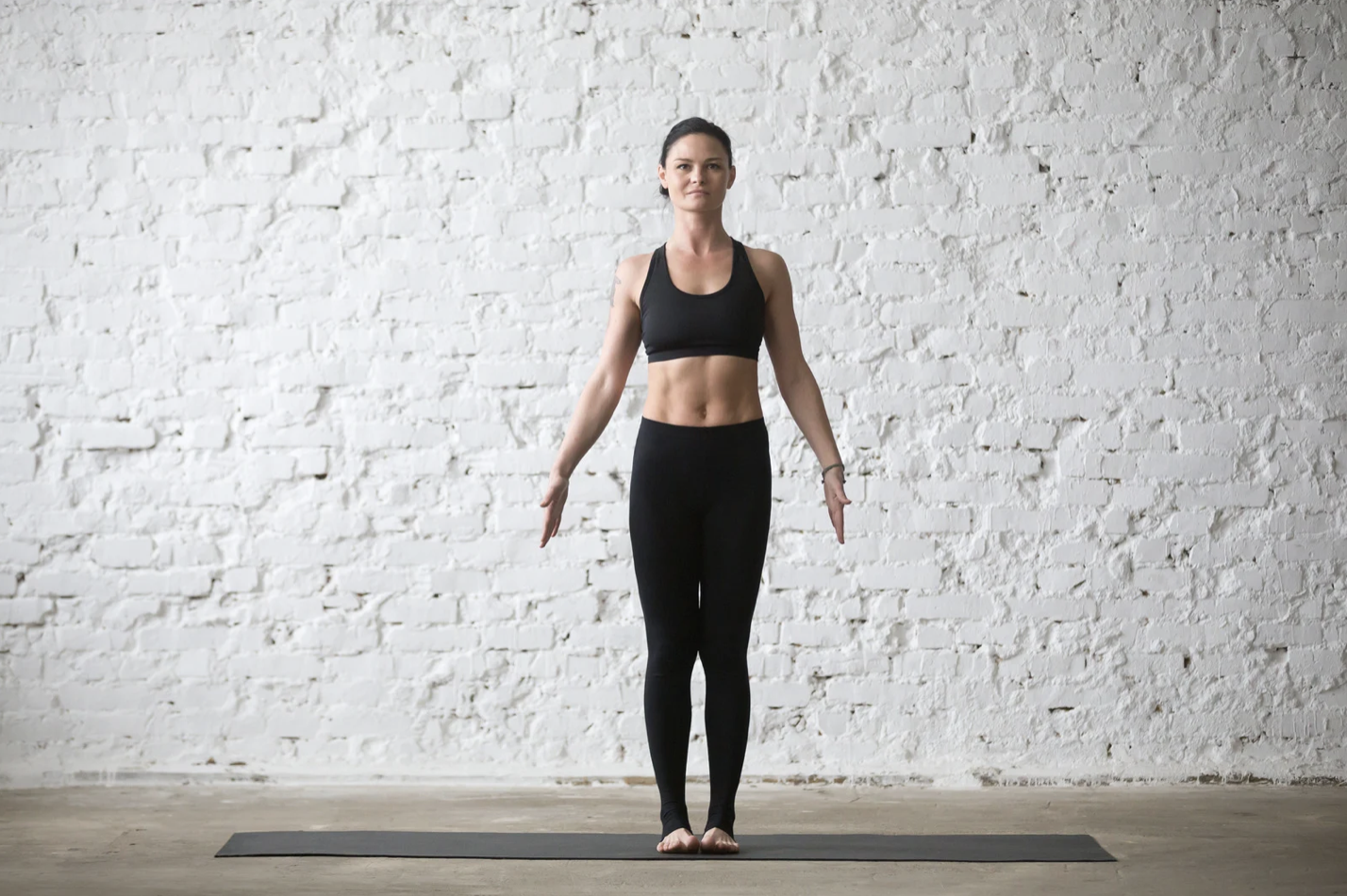
Mountain Pose (Tadasana)
Mountain Pose is the foundation for many standing poses.
Focus on:
• grounding through the feet
• lengthening the spine
• relaxing the shoulders
Although simple, this pose teaches body awareness and posture.
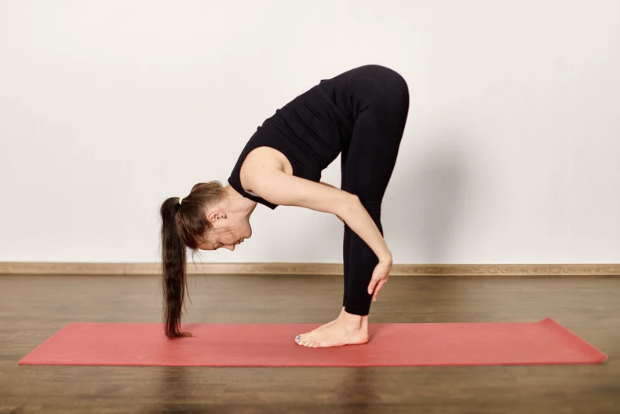
Forward Fold (Uttanasana)
Forward Fold lengthens the back body.
The knees can remain bent to reduce strain on the hamstrings and lower back.
Allow the head and neck to relax.
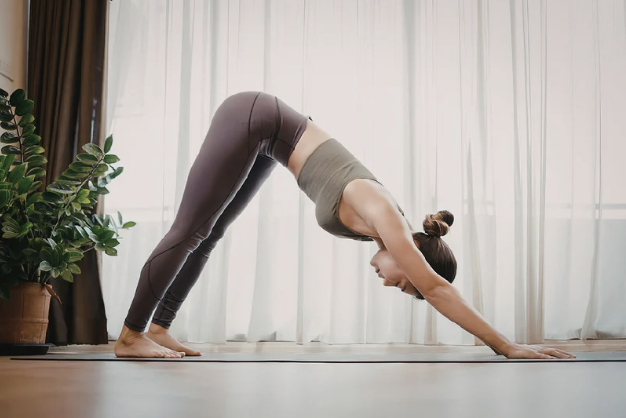
Downward Facing Dog (Adho Mukha Svanasana)
Downward Dog stretches the back of the body and strengthens the shoulders.
Bending the knees helps lengthen the spine.
Despite its intensity, it is often used as a resting pose in yoga practice.
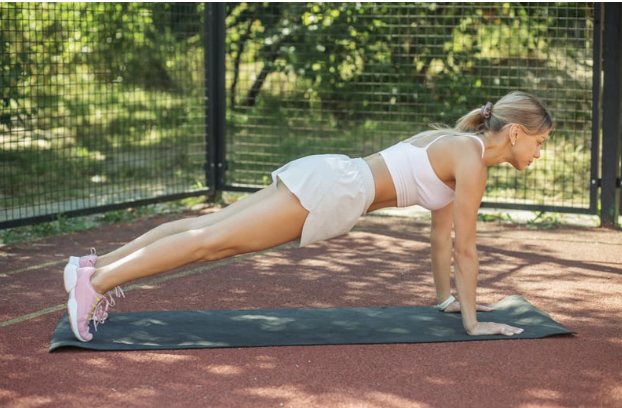
Plank
Plank strengthens the core, shoulders, and arms.
Maintaining a long spine and engaged abdominal muscles helps protect the lower back.
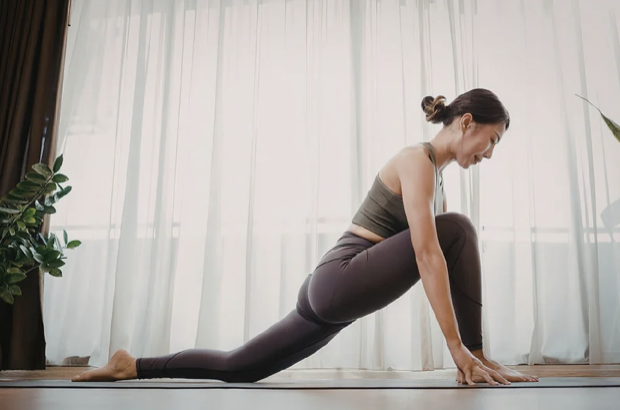
Low Lunge
Low Lunge opens the hips and builds balance.
Keeping the front knee stacked above the ankle helps maintain safe alignment.
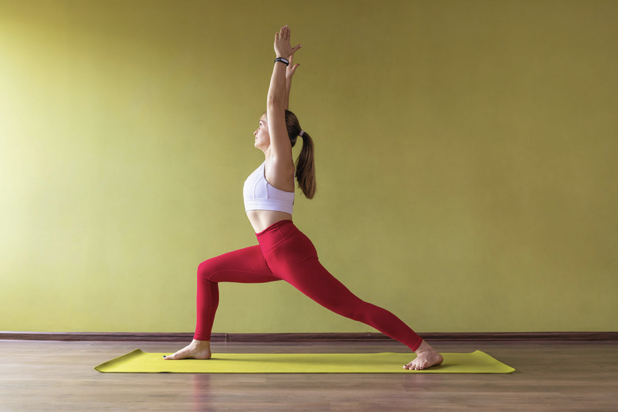
Warrior I
Warrior I builds strength in the legs while encouraging stability and focus.
The back heel remains grounded while the front knee bends.
UNDERSTANDING SUN SALUTATIONS
Sun Salutations are sequences of poses connected through movement and breath.
They are commonly used to warm the body and develop rhythm in practice.
Two widely practiced sequences are:
Sun Salutation A
Sun Salutation B
These sequences include many foundational poses such as Forward Fold, Plank, and Downward Dog.
They are often repeated several times during a class.
SUN SALUTATION A BREAKDOWN
Sun Salutation A is one of the most common sequences practiced in yoga. It links breath with movement and warms the entire body.
Each movement corresponds with either an inhale or an exhale.
Step 1 — Mountain Pose
Stand tall with feet grounded and arms by your sides.
Take a steady breath.
Step 2 — Forward Fold
Exhale and hinge forward from the hips.
Bend the knees as much as needed.
Step 3 — Half Lift
Inhale and lengthen the spine.
Hands may rest on shins or the floor.
Step 4 — Step Back to Plank
Exhale and step or jump the feet back into Plank.
Step 5 — Lower to the Floor
Lower through Chaturanga, knees-chest-chin, or knees down.
Step 6 — Cobra or Upward Dog
Inhale and lift the chest.
Step 7 — Downward Dog
Exhale and press back into Downward Facing Dog.
Hold for several breaths.
Step 8 — Step Forward
Step or walk the feet toward the hands.
Step 9 — Half Lift
Inhale and lengthen the spine again.
Step 10 — Forward Fold
Exhale and relax into the fold.
Step 11 — Rise to Stand
Inhale and lift the arms overhead.
Return to Mountain Pose.
SUN SALUTATION B BREAKDOWN
Sun Salutation B builds heat and strength by adding Chair Pose and Warrior I.
Step 1 — Chair Pose
From standing, bend the knees and reach the arms overhead.
Step 2 — Forward Fold
Exhale and fold forward.
Step 3 — Half Lift
Inhale and lengthen the spine.
Step 4 — Step Back to Plank
Exhale and step back.
Step 5 — Lower Down
Lower through Chaturanga or knees-down modification.
Step 6 — Cobra or Upward Dog
Inhale and lift the chest.
Step 7 — Downward Dog
Exhale and press back.
Step 8 — Warrior I (Right Foot Forward)
Step the right foot forward and lift the arms.
Step 9 — Plank / Flow
Exhale and move through the flow again.
Step 10 — Warrior I (Left Foot Forward)
Step the left foot forward and lift the arms.
Step 11 — Return to Downward Dog
Finish in Downward Dog for several breaths.
CHILD’S POSE (A RESTING POSTURE)
Child’s Pose is one of the most important poses for beginners to understand.
It is always available as a resting position during class.
From hands and knees:
• bring the hips toward the heels
• fold the torso forward
• rest the forehead on the mat
Arms can extend forward or rest beside the legs.
Use Child’s Pose anytime you need to pause and breathe.
BASIC YOGA TERMS
Many yoga classes use Sanskrit names for poses and concepts. Here are a few common terms you may hear.
Asana
Physical posture or pose.
Vinyasa
A sequence of movements linked with breath.
Pranayama
Breathing practices used in yoga.
Drishti
A focused point for the eyes used to help concentration.
Namaste
A respectful greeting often used at the end of class.
Savasana
The final resting pose.
Chaturanga
A strength posture similar to a yoga push-up.
TYPES OF YOGA CLASSES
Yoga studios may offer several styles of classes. These names describe different approaches to the practice.
Vinyasa Yoga
A flowing style that links breath with movement.
Power Yoga
A stronger, faster-paced version of vinyasa that emphasizes strength.
Hatha Yoga
A slower-paced class that focuses on basic postures and alignment.
Yin Yoga
A very slow practice where poses are held for several minutes to stretch connective tissue.
Restorative Yoga
A deeply relaxing practice using props to support the body.
HOW TO APPROACH YOUR PRACTICE
Yoga is not about achieving a perfect shape.
Instead, focus on:
• breathing steadily
• moving with awareness
• respecting your body’s limits
• practicing consistently
Progress in yoga is gradual and personal.
YOGA STUDIO ETIQUETTE
If you are new to yoga studios, these simple guidelines can help you feel comfortable.
• Arrive a few minutes early if possible
• Remove your shoes
• Silence your phone
• Respect quiet during relaxation
• Take breaks whenever you need them
• Modify poses as necessary
Remember: yoga is not a performance.
THINGS BEGINNERS OFTEN WORRY ABOUT
Many new students share similar concerns.
“I’m not flexible enough.”
“I won’t know the poses.”
“I’ll look awkward.”
“I won’t understand the teacher.”
These worries are normal.
Yoga improves through practice and patience, not perfection.
TIPS FOR YOUR FIRST MONTH OF YOGA
If you are beginning a yoga practice, keep these suggestions in mind.
• Bend your knees when needed
• Use props such as blocks or straps
• Rest in Child’s Pose whenever necessary
• Focus on breathing steadily
• Practice consistently rather than intensely
Small improvements accumulate over time.
REFLECTIONS
After class, consider taking a moment to reflect.
What did you notice in your body today?
What poses felt comfortable?
Which poses felt challenging?
How did your breathing change during practice?
What surprised you about the experience?
Reflection helps deepen awareness and understanding of the practice.
FINAL THOUGHT
Yoga is not about mastering poses.
It is about developing awareness, patience, and connection with your body and breath.
Every practice is an opportunity to begin again.